
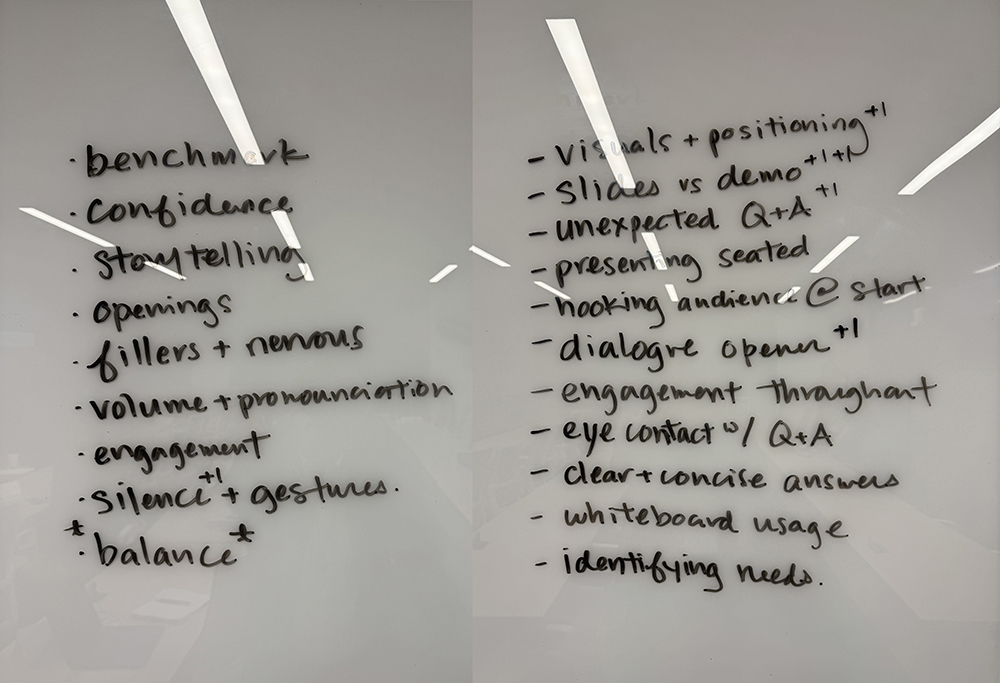
Pictured are 2 lists of what ten senior enterprise architects and solution consultants were most interested in learning about during a presentation skills training I recently led. Do you see the common theme between both lists?
I’ll give you a hint. It’s the end result of what most of those items lead to.
Ironically, the answer lies in the exact technique I used to get these priorities from them.
Engagement. They all wanted to improve their ability to keep their audience engaged.
So whether you’re leading a portion of your team’s weekly sync, driving a discovery call in front of a prospect, or delivering actionable insights to a client on a quarterly business review, how can you make them engaged with your content?
Here’s how to get them leaning in within the first 60 seconds of your meeting:
- 1Align your content to their motivators, goals & values: It doesn’t matter how important your content is if it doesn’t align with what they want. Before structuring any content for your presentation, write down the motivators, goals and values of the people in your audience. Map out what they want and why they want it, then show them how your content helps them achieve those things.
- 2Ask your audience what they want to cover first: The biggest mistake most presenters make is assuming they know what’s best. A lot can happen between scheduling a meeting and having the meeting: new information comes out, unexpected events happen, and priorities change. Within the first 60 seconds, ask your audience what they want to get out of the meeting and LISTEN.
- 3Tailor your meeting to their responses: This is the part that gets people nervous; adapting your meeting to what they want. Spend more time on the topics they said they care about. “What if I’m not prepared for what they want to discuss?” Better to know that up front versus having them uninterested and annoyed. Adapting the meeting to their needs is a key audience engagement skill.
What should you do if they want to discuss something you’re not prepared for? What are specific techniques you can use on the spot to align your content with their priorities?
These are the types of communication skills I teach to sales teams, customer success teams, and leadership teams. If you or your team regularly leads high stakes presentations in front of customers, prospects, and/or internally, let’s connect and have a conversation!