
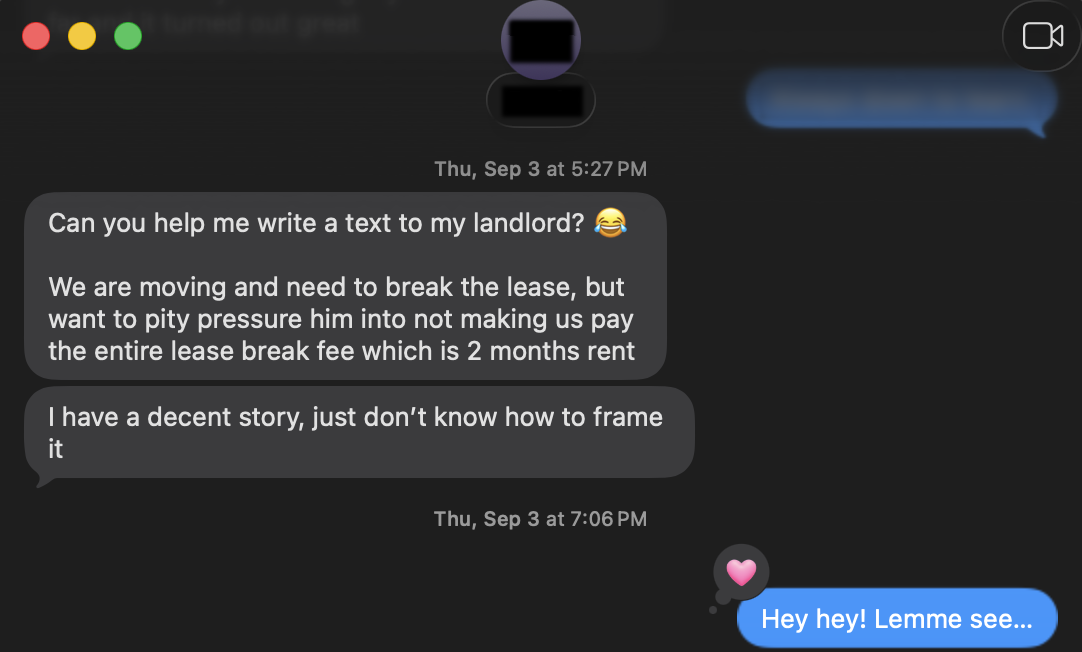
I was coming home from the gym when I saw these texts from a friend. He was terminating his apartment lease a year early and wanted to see how he could avoid $9,300 in early termination fees (ouch).
Contractually, my friend was on the hook with no way out. But with the right approach and a few negotiation tactics, I knew we could make something happen. Perhaps a reduced fee. It was worth a shot.
We hopped on a call where I laid out exactly what to say and how to say it. A week later, my friend sent me an update:
“Your advice was gold. Thanks man.” The landlord agreed to waive the entire fee!
How did he talk his way out of a situation where he had zero leverage to negotiate against his signed lease agreement?
- 1Pick the correct channel of communication: I first convinced my friend that texting this information to his landlord was a really bad idea. In any high-stakes conversations, especially ones where you want to appeal to the emotions of others, never send it in a written format! Hop on the phone (good), schedule a virtual meeting (better), or meet them in person (best).
- 2Write down their motivators, goals & values: The right strategy will depend on the other party’s motivators, goals & values. The mistake most people make is only thinking about positional bargaining (negotiating solely on desired outcomes). Ironically, the best way to get what you want is to first understand the principles and interests that guide what they want.
- 3Create solutions for mutual gain: Once you’ve listed out what they want, think of multiple solutions that satisfy both parties’ needs. Landlords want to get paid on time with the least amount of hassle involved. My friend needed to move out ASAP. So we brainstormed multiple ways he could vacate the unit with minimal economic impact for the landlord.
- 4Have your research with you at the negotiation: Bring all of your notes/research to the negotiation. If the discussion gets heated or sidetracked, you need a way to separate those distractions from the actual problem being addressed. Use your notes to remind them (and yourself) of the core issues at hand so you can focus on solving those issues together.
There’s a lot more to negotiation than these 4 steps. Are you interested in upskilling your team’s negotiation skills? If yes, let’s have a conversation!